The (Hitting) Revolution
will be Televised
Over the past few years, the world of hitting instruction has seen the first hints of a revolution; a bottom-up revolution fueled by advances in technology. First there were small, halting advances driven by slow motion film and low-cost video. Now, more steady advances are being fueled by High Definition (HD) video and super slow motion (xMo) video cameras. As a result, while the world of golf instruction still has a large advantage over the world of hitting instruction, that advantage is starting to narrow.
The First Generation: Slow Motion Film
The first major advance in hitting technology was the introduction of slow motion film.
This technology produced strings of images that were of very
high quality with little to no blurring.
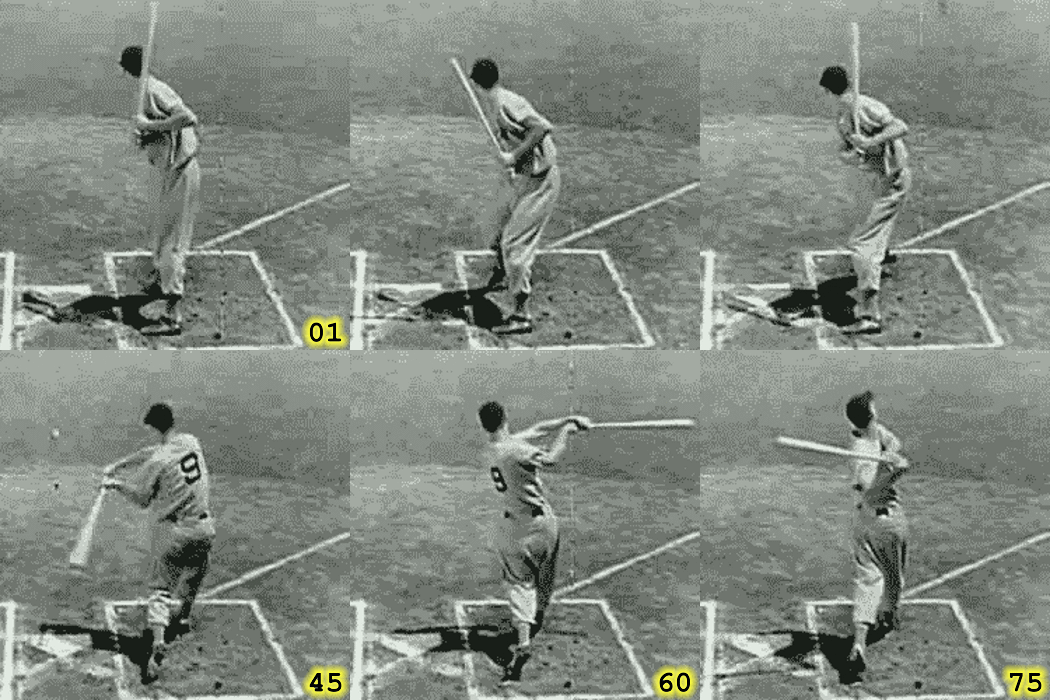
Ted Williams' Swing
However, the impact of this technological advance was muted by a limitation of the technology; with celluloid-based film, you cannot pause and spend a significant amount of time looking at an individual frame or else the film will melt. As a result, at the time slow motion film was little more than a gimmick.
The Second Generation: Low-Cost Video
The second major advance in hitting technology was the introduction of low-cost video
in the late 70s and early 80s. That contributed to the proliferation of hitting coaches like Charley Lau and allowed some hitters, like Tony Gwynn, to become their own hitting coach.
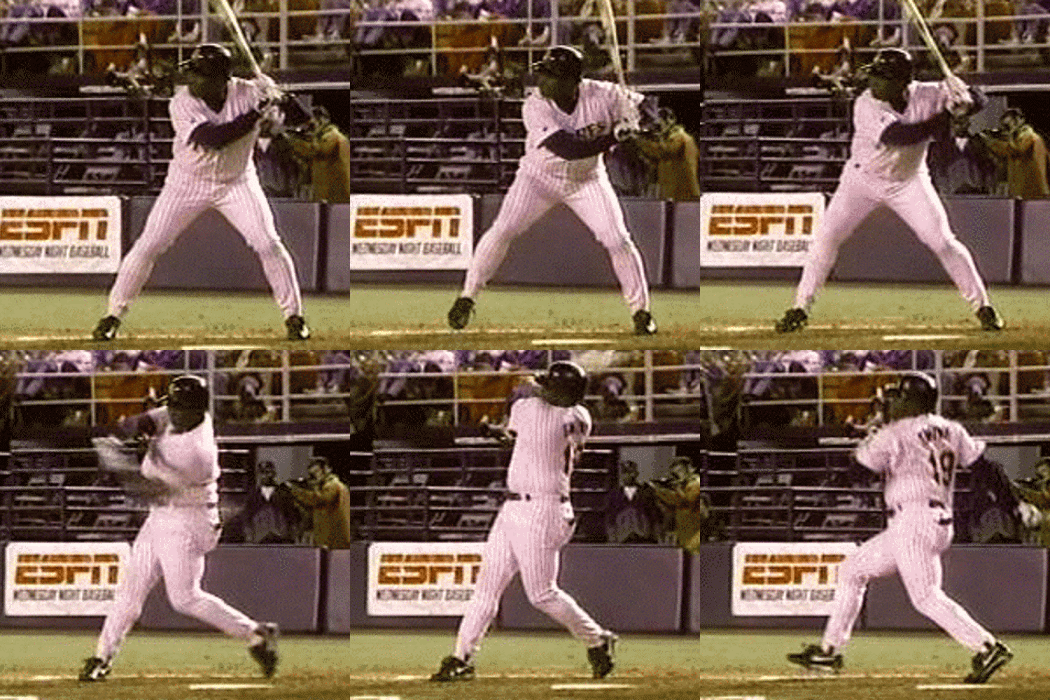
Tony Gwynn's Swing
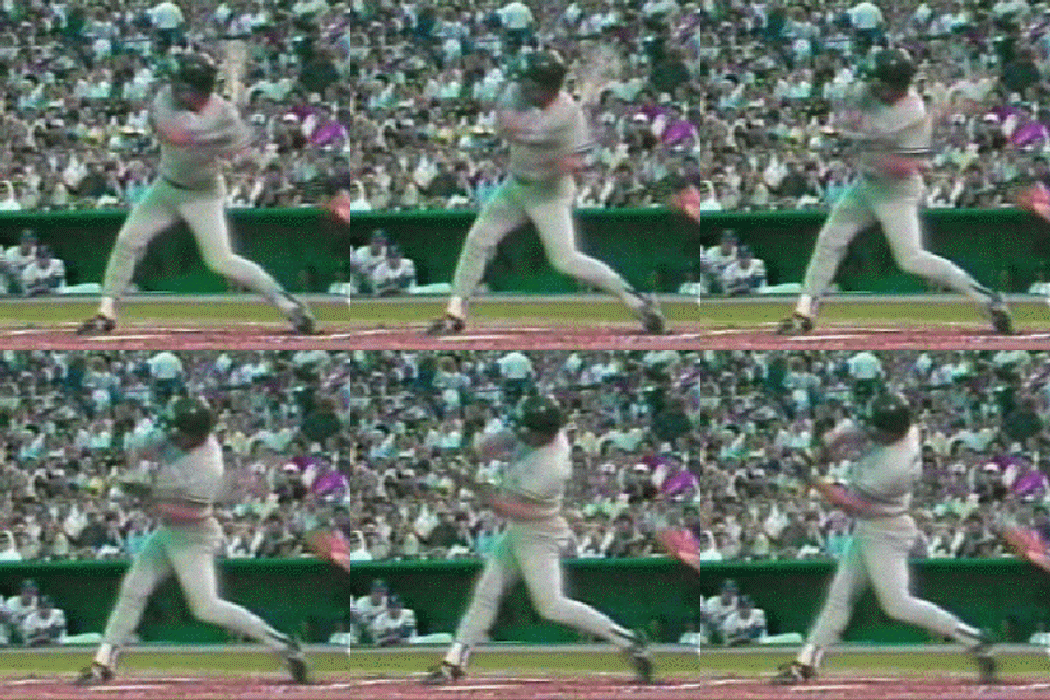
Don Mattingly's Swing
However, the impact of this technological advance was also
limited, in this case by the inability of contemporary video
cameras to clearly capture the movement of the hands and bat. The resulting blurring of the hands and bat allowed hitters and their coaches to believe what they wanted to believe about the proper hand path and bat path.
The Third Generation: HD and xMo Video
The third, newest generation of technology combines the best of both worlds; the clarity of film and the affordability of video.

Albert Pujols' Swing
Anyone with a few hundred dollars can now do what I have done
and buy a HD videocamera and a ticket to a game, capture video
of simply stunning quality, and go over it frame by frame at 60
frames per second. That allows ordinary people to discover for
themselves what a good swing actually looks like.
A Bottom-Up Revolution
In the opening of this piece I mentioned that the hitting revolution
is bottom-up in nature. That is because, in
many cases, the best analysis and instructional work is being done at the youth,
or at most the college, levels. It started 10 or more years ago
on various Internet message boards and has since started to
percolate upwards into the mainstream.
However, many professional organizations still lag well behind the state of the
art. In fact, some organizations do not use video at all. That is significant because it means that the people that
parents are the most likely to listen to are also the ones who
are
most likely to perpetuate the many
myths about hitting.
That
makes it all the more important that you follow The Hanson
Principle and always compare what you are told to what the best
hitters in the world actually do.
|