Swing Analysis
Pete Kozma
I have discussed Pete Kozma's swing in a number places, both
here and in a couple of other pieces...
The Good
When I first looked at the clip below of Pete Kozma's
swing, the thing that stood out to me was his excellent
position at the Point Of Contact (POC).

Pete Kozma
First, Pete Kozma is in the classic Power L position at
the POC. Second, Pete Kozma's lower body also looks good at
the POC; his back leg is in the Power L position and his
front leg is firm and extending. Finally, Pete Kozma also
does a reasonably good job of getting to this position;
rather than hitting around the ball, he stays quite compact
and connected through the start of his swing.
Of course, when evaluating a swing, it isn't enough to just
look at what a hitter looks like at the POC. It's equally
important to understand how a
hitter gets to the POC, and that is where you can see some
problems with Pete Kozma's swing.
The Not So Good
As you may recall, a good swing is 9 to 10 frames to contact
when you are looking at a 60FPS clip and it's 5 frames to
contact when you are looking at a 30FPS clip.
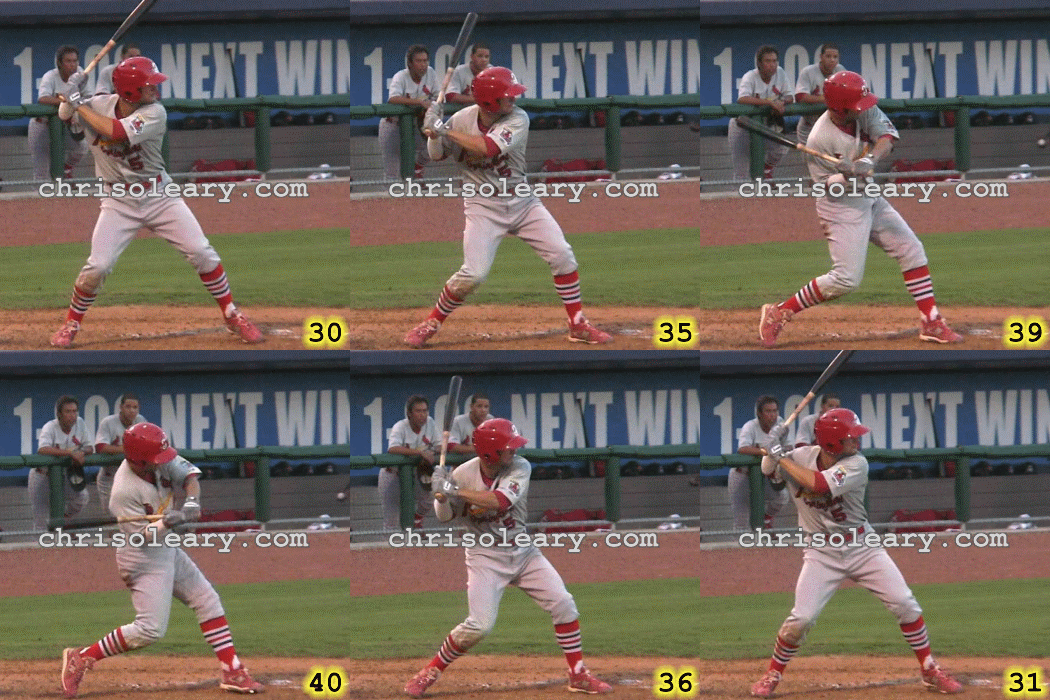
One underlying problem with Pete Kozma's swing became
obvious when I tried to measure the length of his swing by
counting the frames from the start of the swing to the POC.
Pete Kozma
Counting from the planting of his front heel in Frame 34
to the POC in Frame 42, you come up with 9 frames, which is
quite good.
But there's a problem.
I always do my first frame count by counting frames from the
planting of the front heel to the POC. I then confirm that frame
count by taking a second pass and looking at when the hands and
the bat head start moving around toward the ball relative to the
frame in which the front heel plants. I do that to look for one
of a number of swing flaws that can create an overly long,
top-down, and fundamentally inefficient swing.
The problem with an inefficient swing is that the hitter will
be unable to hit the ball hard enough to get on base
consistently against major league quality defenses. Despite what
many people still say and believe, the vast majority of hitters
— pretty much everybody but Ichiro — have to hit the ball hard
in order to be able to hit better than .220.
As it turns out, Pete Kozma jumps the gun quite a
bit; his hands and bat head move quite a bit before his
front heel plants.
Matt Carpenter's Hands
One way to understand a hitter's flaws is to compare to
another, more successful hitter. As it turns out, if you compare
Pete Komza's swing to the swing of teammate Matt Carpenter, you
will see some significant differences.

Matt Carpenter
The clip above shows Matt Carpenter absolutely destroying a
ball and hitting it out of the Braves' spring training stadium.
The thing to notice is how, as his front heel drops into Heel
Plant, Matt Carpenter's hands and the knob stay essentially in
place.
He keeps his hands back.
It isn't until his front heel plants that Matt
Carpenter's hands start to move forward and down. That is important
because it significantly increases the efficiency of Matt
Carpenter's swing.
Pete Kozma's Hands
In contrast, if you look at clips of Pete Kozma's swing, you
will see something very different; he doesn't keep his hands
back. Instead, his hands leak forward and
down as he
goes into heel plant.
Pete Kozma
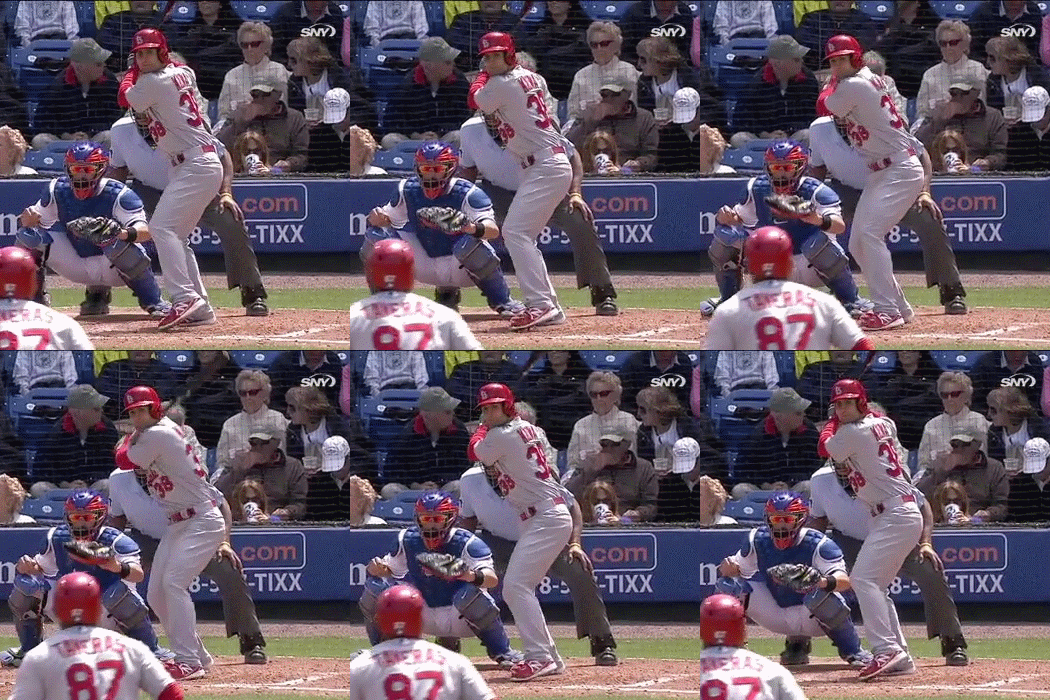
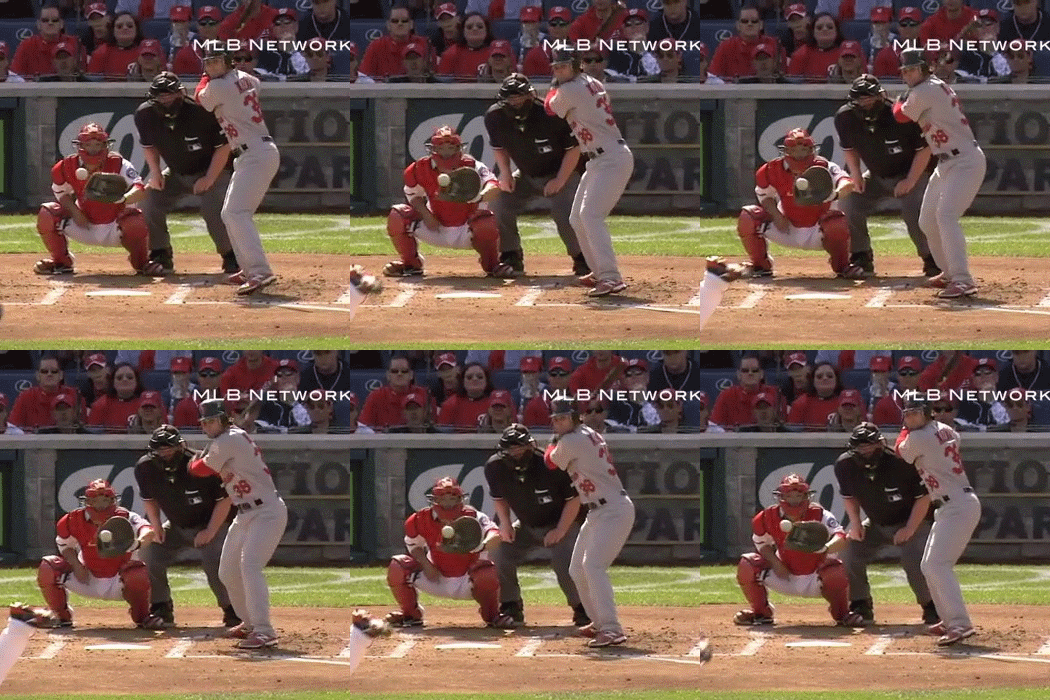
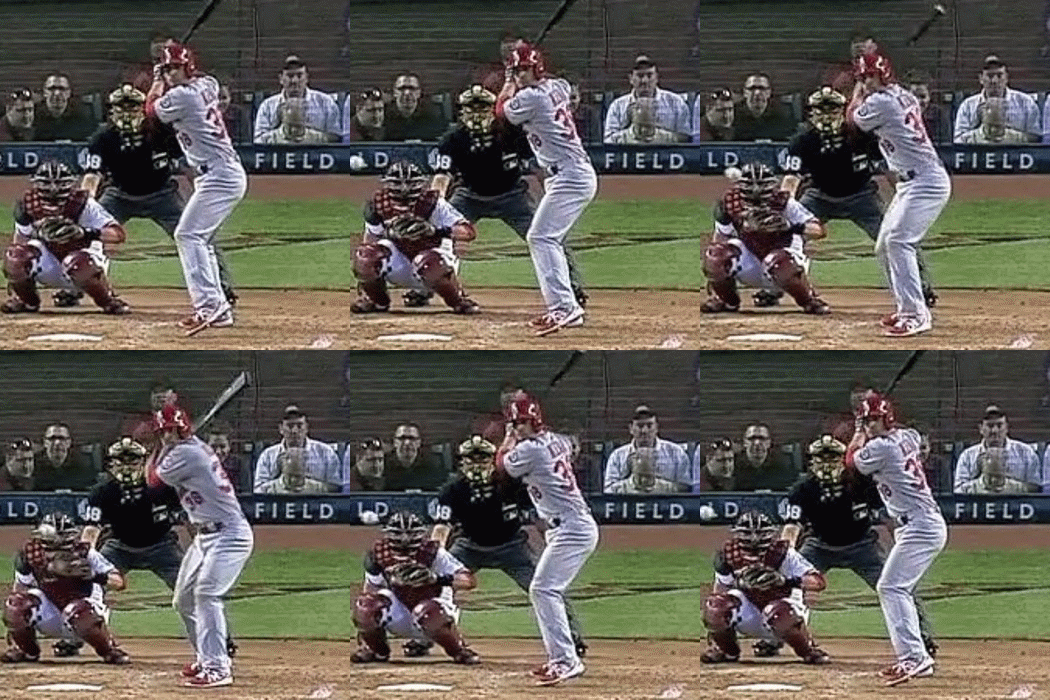
Even when he is hitting home runs, Pete Kozma exhibits the
same pattern of his hands leaking forward and down, which is
likely why his power is so fleeting and inconsistent.
Pete Kozma
Home Run 2012.03.26
Pete Kozma
Home Run 2012.10.10
Pete Kozma
Home Run 2013.04.02
Part of the puzzle has to do with Pete
Kozma's batting stance. Compared to Matt Carpenter, Pete Kozma
is much more upright and erect. As a result, to cover the lower
2/3's of the strike zone, Pete Kozma has to drop down
significantly in order to get the barrel to the ball. Obviously, it is going to be hard for a hitter to hold their
hands up and back if they have to drop them in order to get down
to the ball.
Swing Plane Problems
As in golf, the concept of planes are quite important. It
turns out that Pete Kozma has a problem with his planes at
the start of his swing. That plane problem serves to
lengthen his swing.
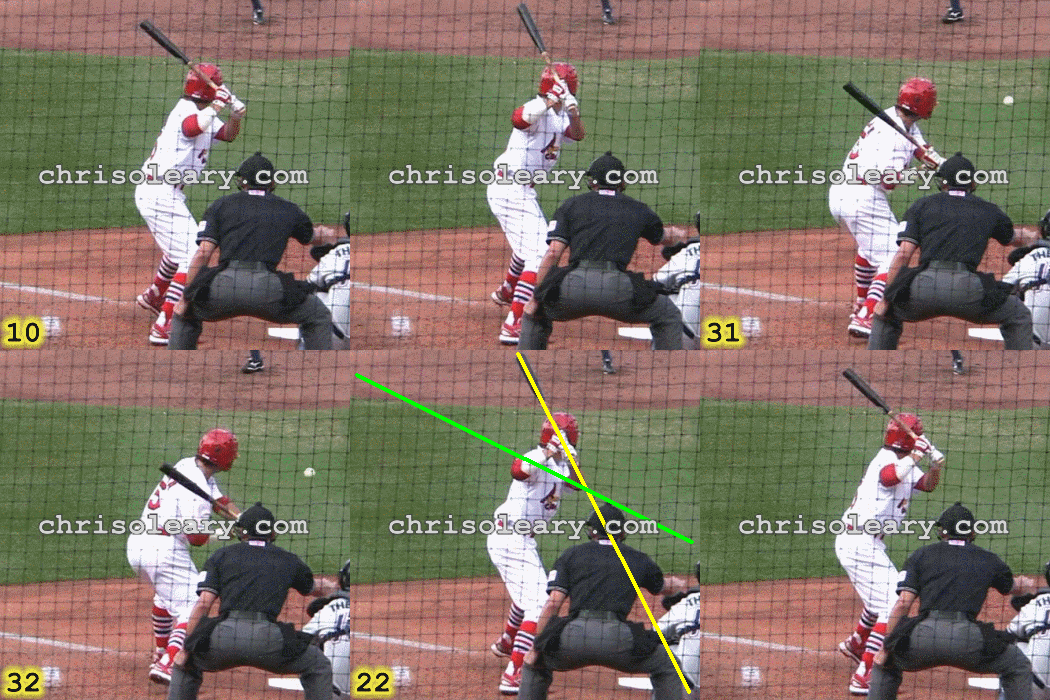
Pete Kozma
The thing to notice is how Pete Kozma's bat gets more
vertical between Frame 10 and Frame 22, such that in Frame
22 his bat (the yellow line) is well above and out of the
plane of his shoulders (the green line). As a result, he has
to start his swing earlier in order to get the bat head
closer to in plane in Frame 28.
The problem with starting the swing earlier is that it
gives you less time to read the pitch and figure out what it
is. As a result, that can leave you vulnerable to quality
off-speed and breaking pitches.
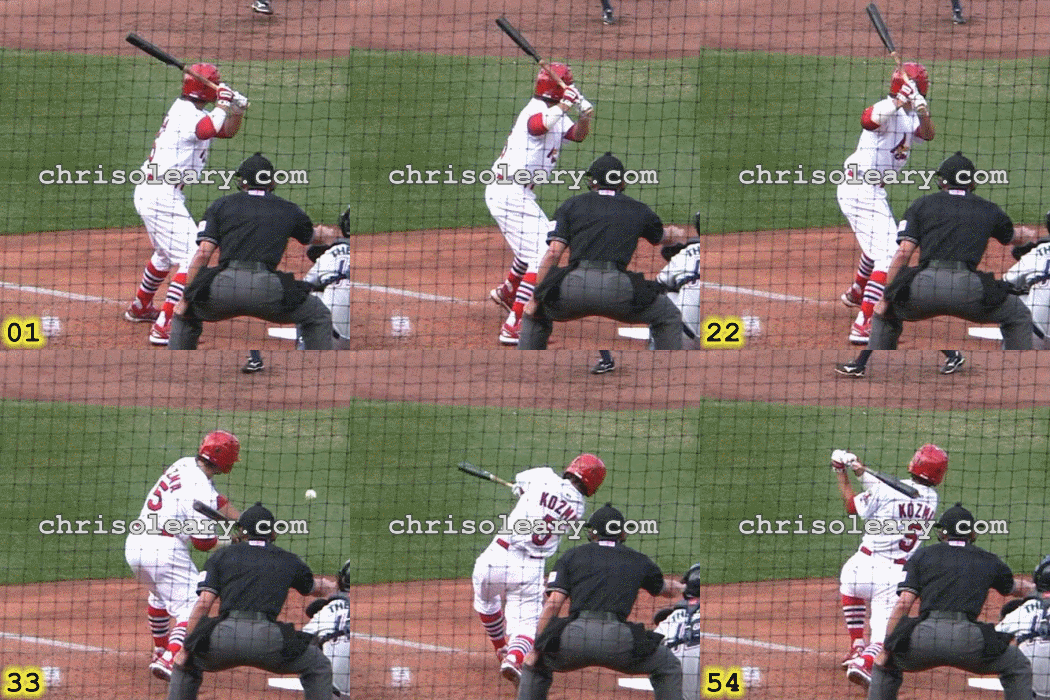
Pete Kozma
To be clear, Pete Kozma's problem isn't that he gets his
bat head moving. Both Albert Pujols and
Matt Holliday do that as part of a move called a Running
Start that can help them overcome inertia. The difference is
that as they get close to the start of their swing, Albert
Pujols and Matt Holliday are dropping the bat head down into
plane.
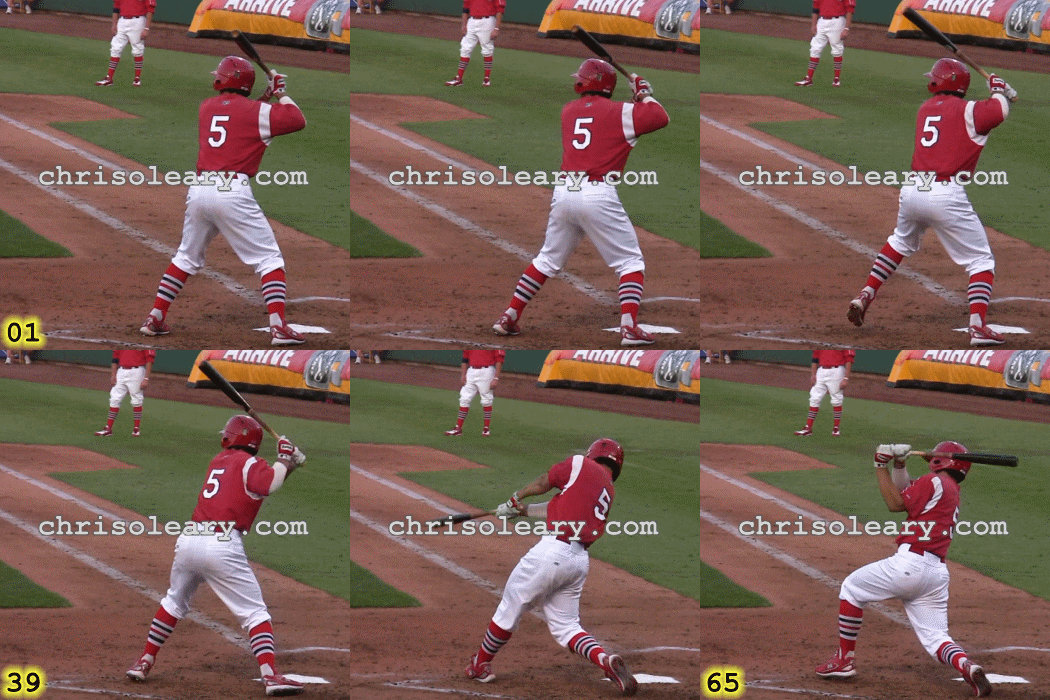
Pete Kozma
In contrast, as he gets close to the start of his
swing, Pete Kozma is raising his bat head up out of plane.
Bad Feet
As I was looking at some other clips of Pete Kozma's
swing, and trying to confirm that what I was seeing was in
fact a habit and not just a one-time adjustment, I noticed
another inefficiency in Pete Kozma's swing that may be costing
him power.
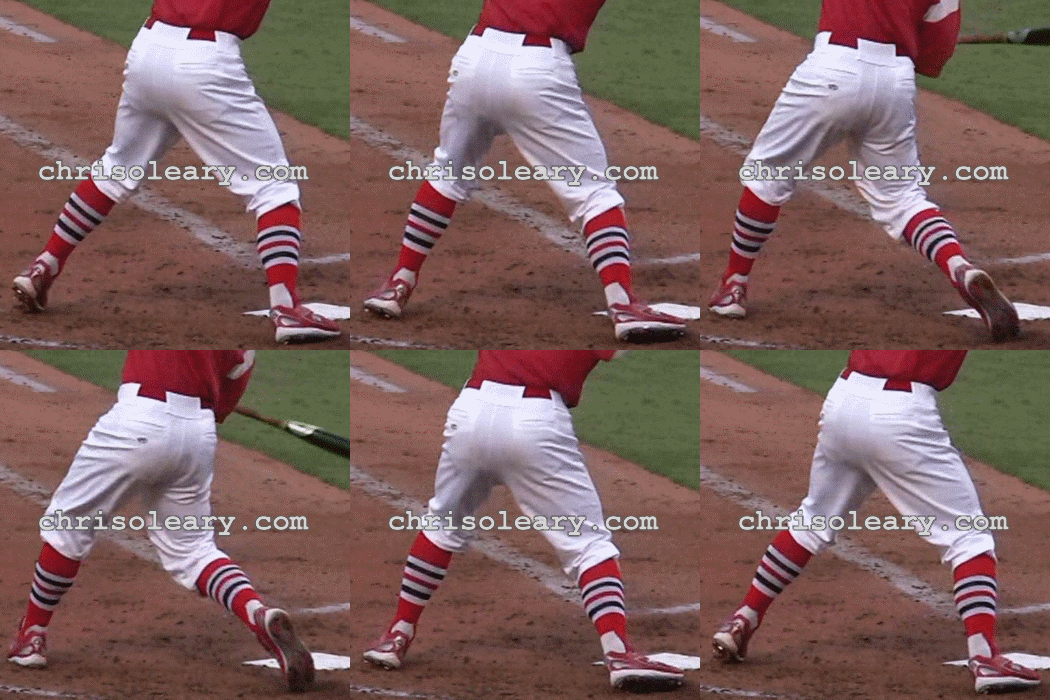
Pete Kozma
The thing to notice in the clip above, and in the other clips
on this page, is how Pete Kozma,
rather than keeping his back foot flat on the ground,
instead quickly rolls onto the inner half of his back foot
as he shifts his weight forward.
Pete Kozma
This will tend to create power problems by reducing the force with which the hips rotate.
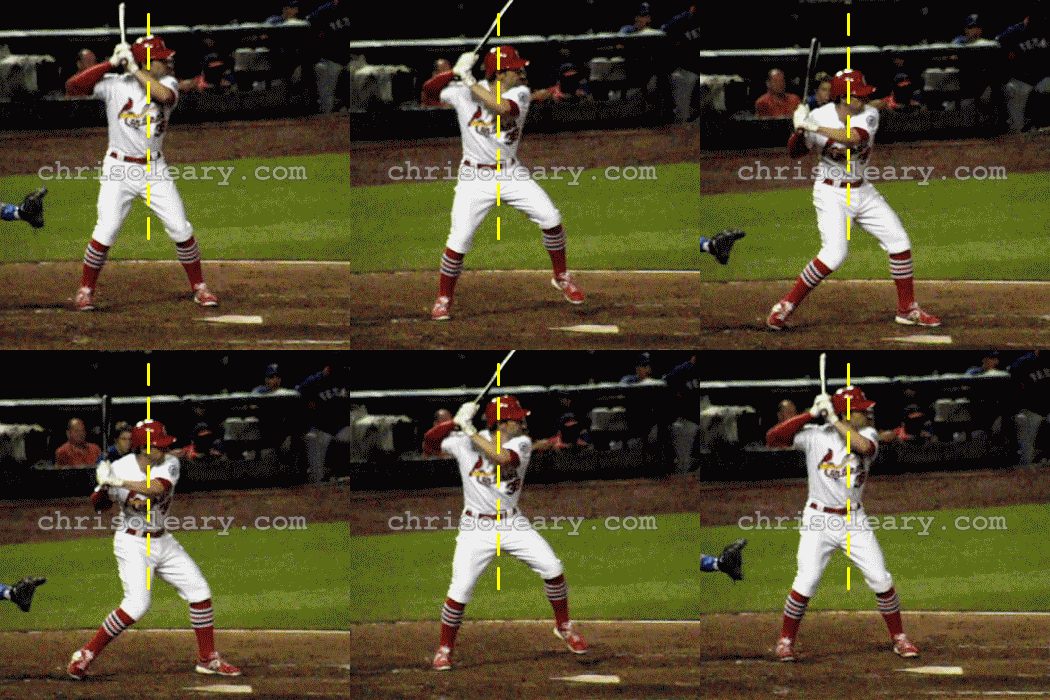
Pete Kozma's Purely Rotational Swing
As I discuss at length elsewhere, another problem that I have
been able to get a good understanding of due to his spending a
full season in the big leagues is
Pete Kozma's purely rotational swing. The gist of the
problem is that Pete Kozma doesn't have any significant linear
compoent to his swing. Instead his swing is pretty much entirely
rotational and, to use the common perjorative, "spinny".
Pete Kozma
June 23, 2013
But Why?
When I see a hitter with the kinds of flaws that I see in
Pete Kozma's swing, I always wonder if it's due to a problem
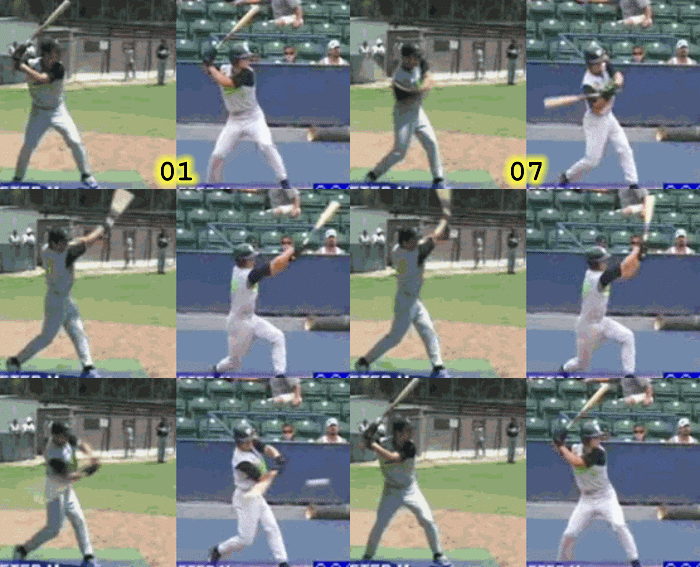
with how they were taught to hit. As it turns out, I found the
clip below, that was put together by Carlos Gomez and that shows
Pete Kozma hitting in batting practice and in a game, shows that
Pete Kozma has long had problems with his swing.
Pete Kozma
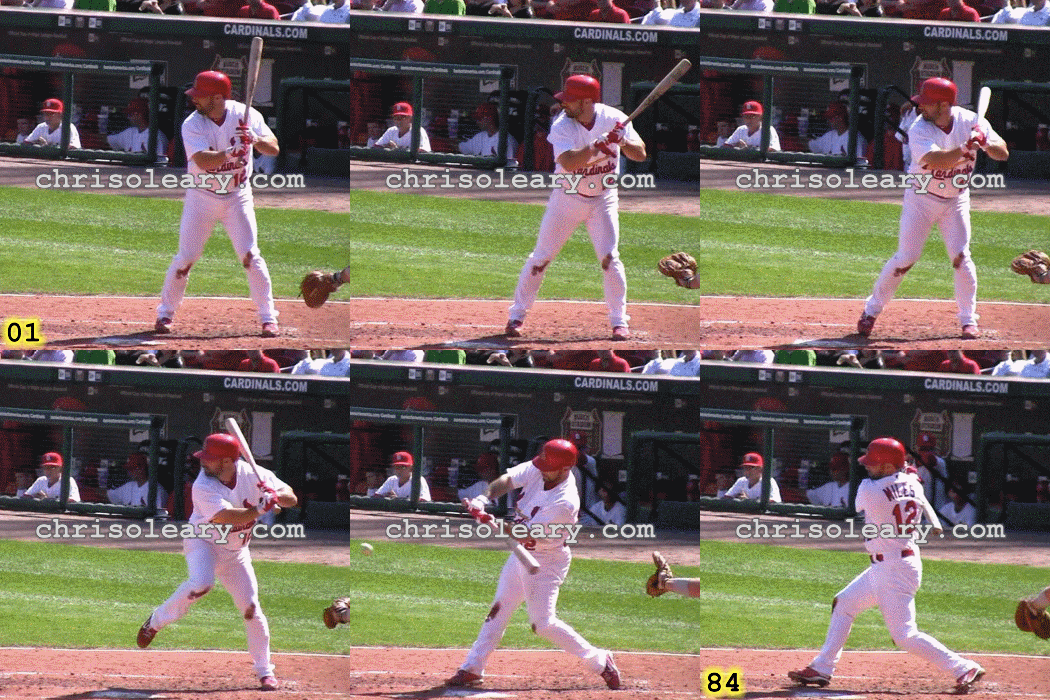
The thing to notice is how extended Pete Kozma is at the
Point Of Contact. While he is in a good position just before the
Point Of Contact, Pete Kozma then extends and hits the ball well
out front. While many people teach this, and you do it see in
the swings of hitters like Aaron Miles...
Aaron Miles
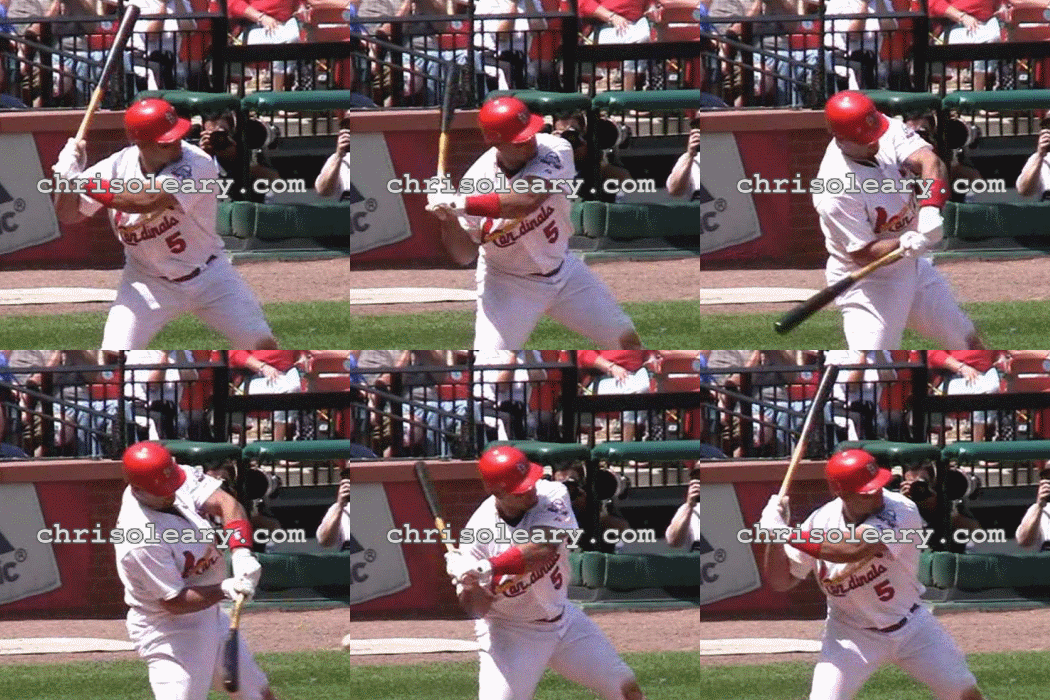
...you do not see it in the swings of the best hitters
like Albert Pujols...
Albert Pujols
Instead, the best hitters tend to let the ball travel and hit
it closer to their bodies, which lets them swing with their
entire bodies and not just their arms.
The swing that Pete Kozma used in high school is a very
conservative, cautious, "just go for singles and get on base"
swing that worked with the hotter bats that Pete Kozma played
with in high school but that simply, and obviously, doesn't work
with wood bats.
The Good News
The good news is that, despite all of the bad hitting
instruction that Pete Kozma has received over the years, and all
of his flaws, he doesn't have any
glaring, hard to fix mechanical flaws. Instead, everything I am
talking about is quite fixable and can usually be fixed
relatively quickly. As a result, I believe with some hard work
and well-directed practice Pete Kozma can get back on track
and become the middle infielder that the
Cardinals so desperately need.
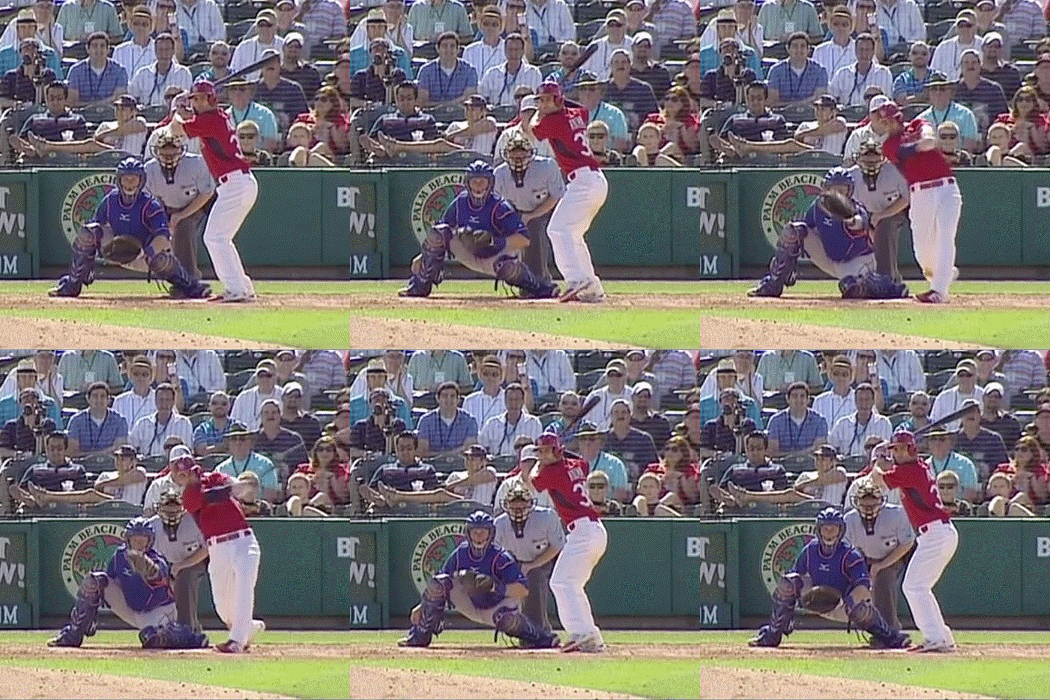
I watched the Cardinals game yesterday and saw Pete Kozma hit
a double to the left field corner.
Pete Kozma
Double to LFC
2014.3.2
What's interesting about this swing is that it addresses a
number of the points that I make above.
First, Pete Kozma's feet are better. He starts out with a
narrower stance and then takes a shorter, lower step forward. As
a result, he stays in his back foot better and rotates better as
a result.
Second, Pete Kozma's swing plane is better. His bat starts
out flatter and then stays flatter. As a result, he's in a
better position to hit the pitch up in the strike zone.
That isn't to say that Pete Kozma is entirely fixed.
He's still not keeping his hands back and keeping his front
shoulder closed long enough (which are two slightly different
ways of saying basically the same thing). Instead, his hands
start to drift forward before Heel Plant and his front shoulder
also drifts open a bit early. The result will be an inefficiency
that will keep him from hitting the ball as hard as he could.
However, I could see this swing producing a signirficantly
better average than last year.
|