|
|
...the arm action that has ruined countless arms. I retain this page for those who want to verify what I said, when, using the Wayback Machine. Death To The Inverted W7/26/2007 I have a huge problem with a pitching arm action cue that is referred to as the "Inverted W" (or the "M", "Upside-Down W", "Winged Arm Action", "Gull Wing Arm Action", or "Breaking the hands with the elbows"). That is because -- as with the other inverted arm actions like the Inverted L and the Inverted V -- I believe that pitchers who make the Inverted W are at a significantly higher risk of experiencing shoulder and elbow problems. Nature or Nurture?In the interests of accuracy in journalism, I held off on publishing this essay for a number of months because I wasn't sure if pitchers were actually being taught to do this or if they were simply figuring this out on their own (and being praised for it). However, just the other day I had an exchange with a pitching guru named Paul Nyman in one of the forums on Steven Ellis' Lets Talk Pitching web site where he indicated that the Inverted W is indeed something something that he advocates... I can point to literally hundreds of players who have benefited significantly using the exact same methods (inverted W, scapula loading, pelvic loading, etc.) that you THINK are a problem or what you THINK causes problems. The Inverted W DefinedFor those of you with medical or other scientific backgrounds, let me give you a more technical definition of the Inverted W. I define the Inverted W as being more than 90 degrees of shoulder abduction with the Pitching Arm Side (PAS) elbow above the level of the shoulders (aka hyperabduction) combined with 5 or more degrees of shoulder horizontal adduction (PAS elbow behind the shoulders). In the Inverted W, the Glove Side (GS) and PAS upper arms are both elevated. In the Inverted V and Inverted L, only the PAS upper arm is elevated. Reasons I Don't Like The Inverted WLet me explain why I don't like the Inverted W. It Is What Many Frequently-Injured Pitchers DoIf you look at the pitching mechanics of pitchers who have had injury-plagued careers, you will often see the Inverted W, with the PAS elbow both above and behind their shoulders. 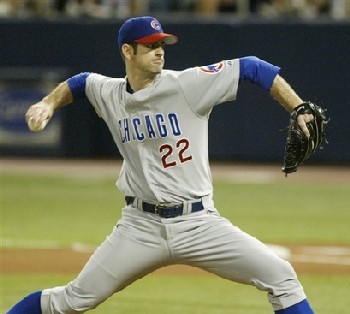
Mark Prior's Inverted WYou will also see this pattern bear out if you go back into the history books and look at the careers of guys like Don Drysdale and John Smoltz. They both had some Inverted W (or Inverted L) in their arm actions and ended up retiring due to shoulder problems. 
John Smoltz's Inverted WIf I am correct about this, then I believe a number of young pitchers will experience problems as a result of making the Inverted W, especially if they are moved into, or continue to pitch in, the starting rotation. 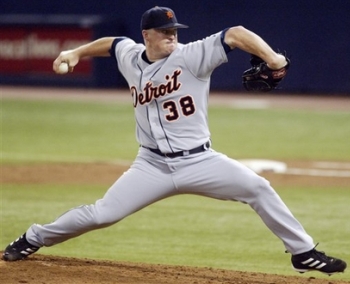
Jeremy Bonderman's Inverted W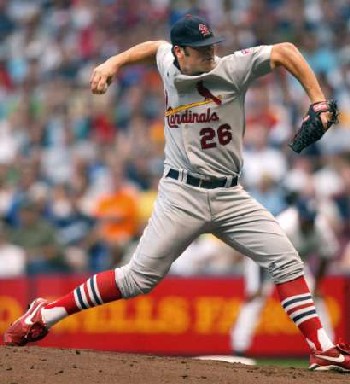
Anthony Reyes' Inverted W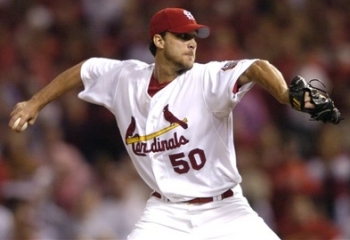
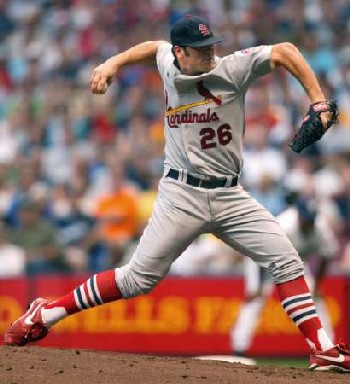
Adam Wainwright's Inverted W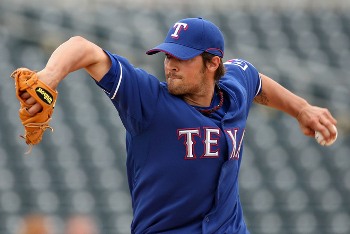
C.J. Wilson's Inverted W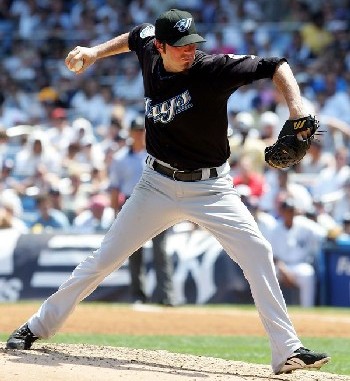
Shaun Marcum's Inverted WSome of the pitchers who make the Inverted W include...
-
AJ
Burnett It is Not What Great Pitchers DoIf you look at the pitching mechanics, and in particular the arm actions, of great -- and by great I mean pitchers who had long, successful, and relatively injury-free careers -- pitchers like...
- Randy Johnson ...you will see that none of them made the Inverted W. While you can say that all of these pitchers employed Scapular Loading, I would argue that the critical difference is that their elbows never get above the level of their shoulders. Why The Inverted W Is BadLike the Inverted L and the Inverted V, the Inverted W is not (that) bad in and of itself. The Inverted W doesn't DIRECTLY lead to injuries. Instead, the problem with the Inverted W is that it can create a timing problem, where the PAS forearm is not in the proper, vertical position at the moment the GS foot lands and the shoulders start to rotate. 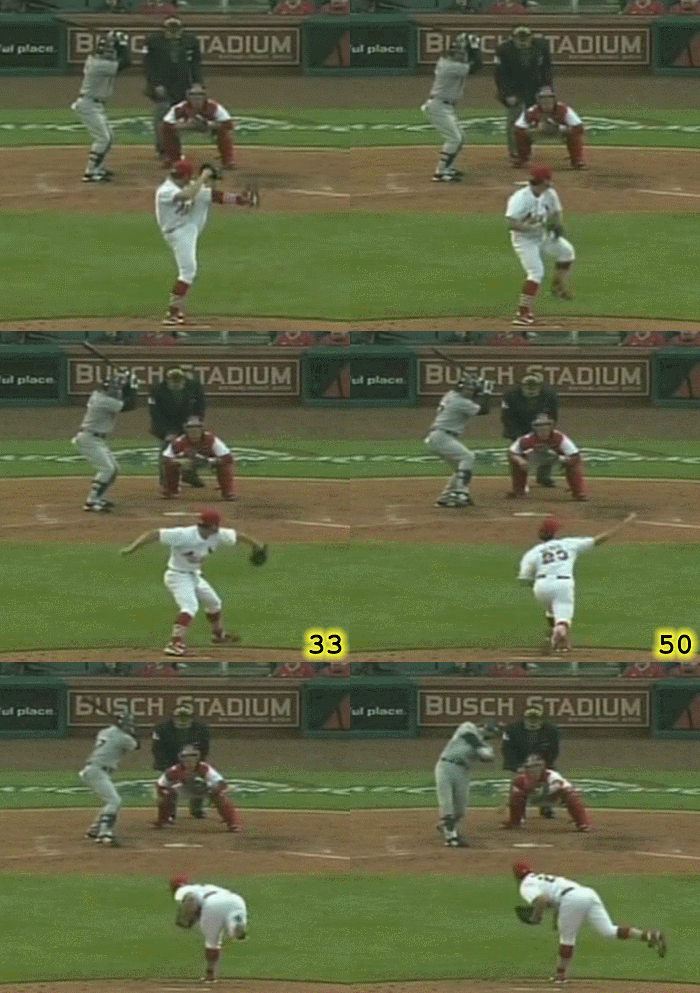
Anthony ReyesYou can see this timing problem in the clip above of Anthony Reyes. The thing to notice is the position of Anthony Reyes' PAS forearm in Frame 41 at the moment his GS foot plants. Notice how Anthony Reyes' PAS forearm is horizontal, rather than vertical, in Frame 41. Anthony Reyes's PAS forearm isn't vertical until Frame 45, at which point his shoulders have rotated significantly. The problem with the Inverted W is that it can increase the distance, and thus the force, with which the PAS upper arm externally rotates and increase the stress on both the elbow and the shoulder. Biomechanically SpeakingI go into greater detail about the scientific basis for why the Inverted W is problematic elsewhere, but if you are interested in a more technical, anatomically-based explanation of why I think this is a problem, then let me give you one in the form of an e-mail I received in April of 2007... Chris I am an orthopedic surgeon, and would like to offer you a theory on why the Inverted W is bad to the long term health of the shoulder. I'm not sure he's exactly right about why this is bad, but what he says is interesting enough to make me think I'm on to something. Recognizing The Inverted WIf you look at the arm actions of guys like Randy Johnson, Nolan Ryan, and Greg Maddux, you will see that their Pitching Arm Side (PAS) elbows never get above the level of their shoulders. 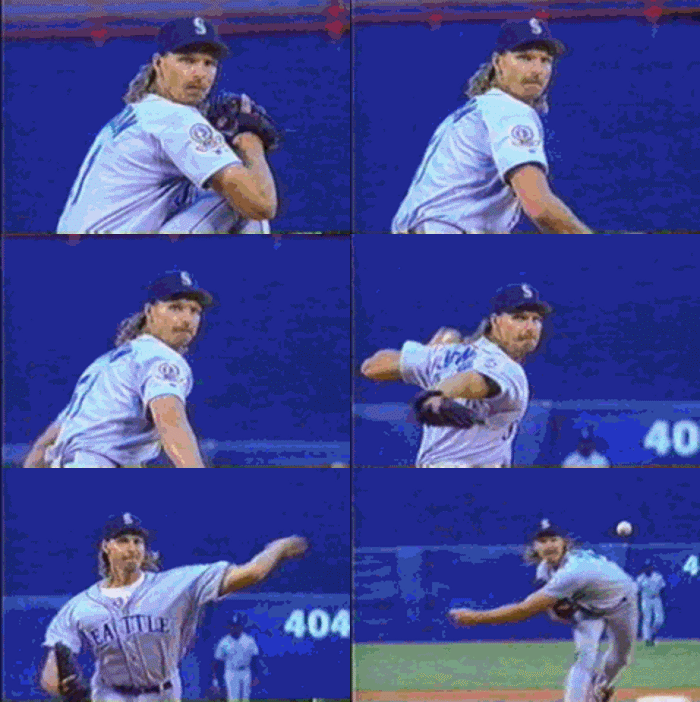
Randy JohnsonYou can clearly see this in the video clip above of Randy Johnson. While at first blush it looks like his PAS elbow gets quite high, if you take into account the fact that Randy Johnson leans forward toward First Base during his stride, you will see that his PAS elbow actually stays well below the level of his shoulders (the yellow line in Frames 43 and 49). You can also see this in the photos below of Nolan Ryan and Greg Maddux. 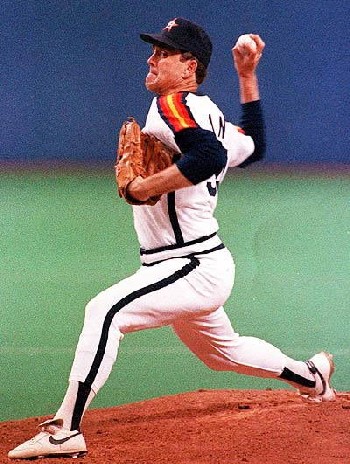
Nolan Ryan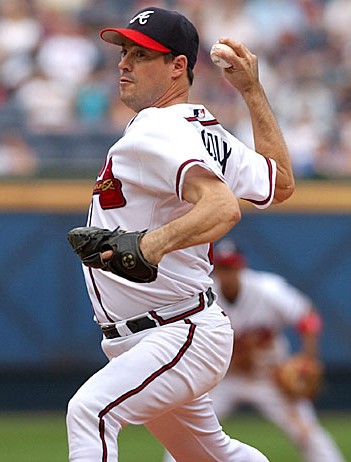
Greg MadduxNotice how their PAS elbows are well below the level of their shoulders after they break their hands. 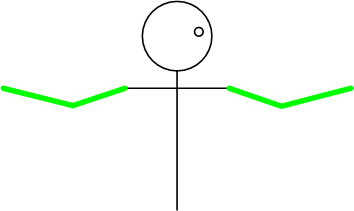
The Standard WIn particular, at the point of maximum scapular loading their elbows are below the level of the shoulders and the hand. This forms the shape of a "W" (the green lines in the diagram above). 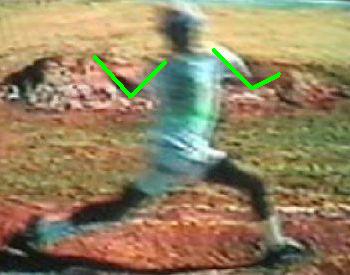
Greg MadduxThis is visible in video clips of Greg Maddux. You can also see the same thing in still photos of Greg Maddux. 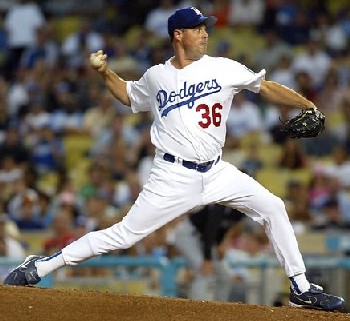
Greg MadduxIn contrast, if you look at the arm actions of pitchers like Mark Prior and Anthony Reyes, you will see that, after they break their hands, their elbows go above and behind the level of their shoulders. 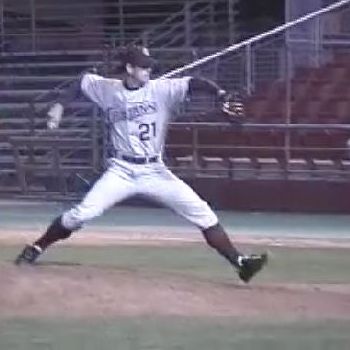
Mark PriorViewed from the side, this forms the shape of an Inverted W (the red lines in the diagram below). 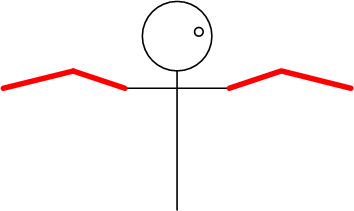
The Inverted WSome people will argue that I am comparing apples and oranges because what I am describing are two different points in time when I compare the Standard W to the Inverted W. While this is true, it doesn't matter for two reasons. First, pitchers who make the Standard W never let their elbows get above the level of their shoulders. Second, the problem with making the Inverted W is that it increases the distance and force with which the PAS upper arm will externally rotate. This increases the stress on both the elbow and the shoulder. Points Of ConfusionI have recently discovered that there is some confusion among my readers about exactly what is (or isn't) the Inverted W and who exhibits it (or doesn't). One example of a player about which there is confusion, possibly due to prior confusion or lack of clarity on my part, is Carlos Marmol of the Cubs. 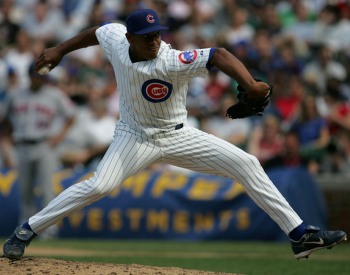
Carlos MarmolWhile it looks like Carlos Marmol is making the Inverted W in the photo above, I do not think he actually is. That is because he is leaning forward toward Third Base in this photo. As with Randy Johnson, that makes his PAS elbow look quite high. However, his PAS elbow does not seem to actually get above the level of his shoulders, which is a key characteristic of the Inverted W. the Inverted W in the NewsThe Inverted W has been in the news a lot, in part because of Adam Wainwright's recent elbow problems. I've got to give two thumbs up to Doug Thorburn. Until recently, he wasn't a fan of the Inverted W and thought the problems that the pitchers who utilized it were likely due to other things. However, in this piece, which is a triumph of intellectual honesty, he acknowledges the evidence and agrees that there may indeed be something to the idea that the Inverted W is problematic. Despite Doug Thorburn's possible conversion, some people are still either not fully understanding what the Inverted W is or they are still not buying that it is a problem. I discuss my arguments for why I believe the Inverted W is problematic, and the research that backs up my ideas, at greater length in my new piece on the scientific basis for my theory about why the Inverted W is problematic. A recent piece by Tom Verducci in Si.com about Stephen Strasburg and the Inverted W -- a piece that, without attribution, pretty much just cuts and pastes from some of the key sections of this and other articles by me -- is getting a lot of attention. However, because Verducci "borrows" my ideas without really understanding them, he gets multiple things wrong. In my updated piece on the pitching mechanics of Stephen Strasburg, I go over what Verducci gets right and what he gets wrong. Finally, I just put together a piece that discusses the overlap between pitching mechanics, injuries, the Verducci Effect, and Pitcher Abuse Points. The bottom line is that, while I do think abuse and overuse are important, I think pitching mechanics ultimately explain why some pitchers fall victim to The Verducci Effect while others don't. |
| about | contact | copyright | sitemap | liability policy |
 This is one of my earliest discussions of the...